
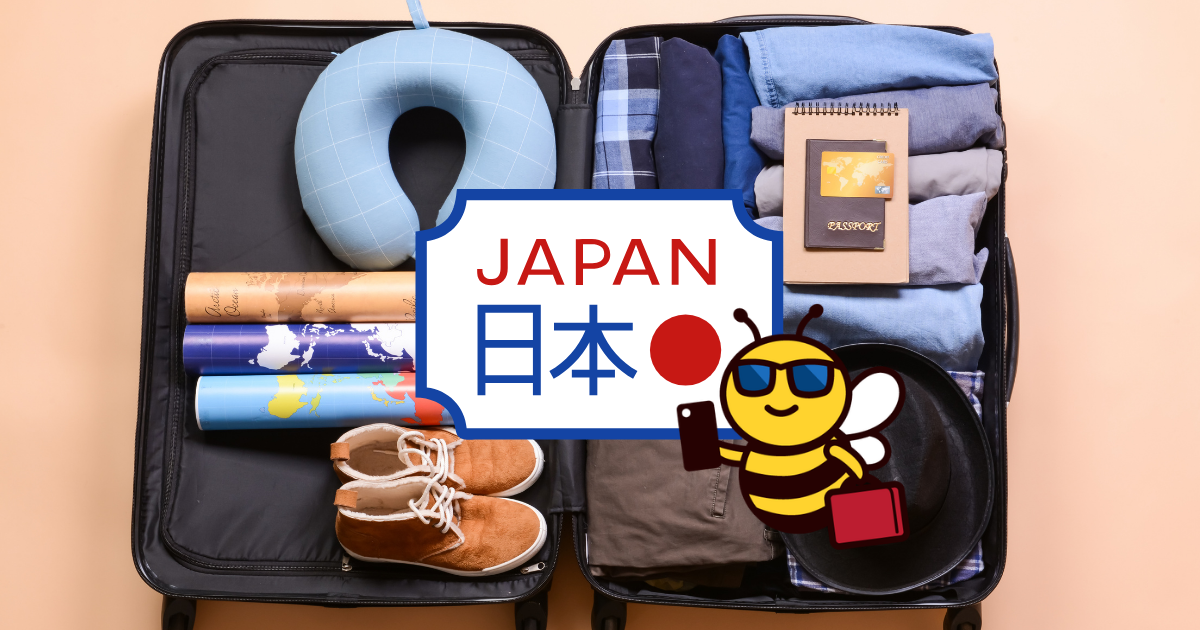
Before traveling to Japan, there are a few important things to prepare, such as checking your passport, registering for Visit Japan Web, and getting a SIM card or eSIM. Since Japan’s climate varies greatly by season, it’s also important to pack according to the time of year you’ll be visiting.
In this guide, we’ve put together an easy-to-follow checklist of everything you need for your trip to Japan, along with the essential preparations to make before departure. You’ll also find helpful information on cash, transportation IC cards, power plugs, and other travel tips.
At the end of this article, you’ll find a free Japan travel packing checklist (available as both an online checklist and a downloadable PDF). Be sure to use it before you leave!
Japan Travel Packing Checklist Overview
Things to Prepare Before You Leave
Travel Essentials for Japan
Useful Items to Bring
Seasonal Packing Guide
Japan Travel Packing Checklist
Frequently Asked Questions
Japanese SIM Card with Phone Number for Tourists
Summary
Japan Travel Packing Checklist Overview
Let’s start with a quick overview of the items and preparations you should check before your trip.
| Before You Leave | Passport, visa, Visit Japan Web, SIM card/eSIM, transportation IC card |
|---|---|
| Travel Essentials | Cash, credit card, smartphone, charger, prescription medications, etc. |
| Useful Items | Portable battery, reusable shopping bag, folding umbrella, etc. |
| Seasonal Items | Season-appropriate clothing, etc. |
Now, let’s take a closer look at each category.
Things to Prepare Before You Leave
Check Your Passport and Visa
First, make sure your passport is still valid.
If you hold a passport from Taiwan, Hong Kong, or South Korea, you generally do not need a visa for a short stay in Japan for tourism. However, entry requirements may vary depending on the length and purpose of your visit, so it’s always a good idea to check the latest immigration requirements before you travel.
Register for Visit Japan Web
Visit Japan Web is an online immigration service provided by the Japanese government.
By registering your immigration and customs information in advance, you can complete arrival procedures more smoothly after landing in Japan.
Although registration is optional, many travelers use it to reduce waiting times at the airport. Complete your registration before departure and make sure you can access your QR code when needed.
Prepare a SIM Card or eSIM for Japan
During your trip, you’ll likely use your smartphone frequently—for navigating with Google Maps, checking train routes, using translation apps, and more.
To stay connected as soon as you arrive, it’s a good idea to prepare a SIM card or eSIM before your trip.
If you only need mobile data, a data-only SIM or eSIM will be sufficient. However, a SIM card or eSIM with a Japanese phone number is recommended if any of the following apply to you.
When You May Need a Japanese Phone Number During Your Trip
- You want to make restaurant reservations or use waiting list services that notify you by phone or SMS.
- You plan to use services that require SMS verification, such as ticketing services or bike-sharing apps.
- You visit Japan frequently for concerts, events, business trips, or other reasons and would like to keep the same Japanese phone number.
Get a Transportation IC Card (Suica, etc.)
Transportation IC cards such as Suica, PASMO, and ICOCA make traveling on trains and buses throughout Japan quick and convenient.
They can also be used for payments at convenience stores, vending machines, and many other locations, making them extremely useful during your trip.
If you use an iPhone, you can add a Suica card to Apple Wallet before your trip.
If you use an Android device, however, many overseas models do not support Japanese IC cards. In that case, it’s generally best to purchase a physical transportation IC card at a train station or airport after arriving in Japan.
Travel Essentials for Japan
Next, here are the essential items you shouldn’t forget for your trip to Japan.
Passport
Your passport is the most important item for any international trip. Be sure to double-check that you’ve packed it before leaving home.
Cash and Credit Cards
Cashless payments are becoming more common in Japan, but some independently owned restaurants and certain tourist attractions still accept cash only.
In addition, physical transportation IC cards (such as Suica and PASMO) can only be recharged with cash at train stations. You’ll also need cash when making offerings at shrines and temples.
It’s a good idea to carry both a credit card and a small amount of Japanese yen.
Flight and Hotel Reservation Confirmations
Many travelers now keep their reservations on their smartphones, but it’s still a good idea to save PDF copies or print them as a backup.
Smartphone and Charger
Your smartphone will be essential in Japan for navigation, translation, and cashless payments.
Don’t forget to pack your charger and charging cable as well.
Power Plug Adapter (If Needed)
Japan uses Type A power outlets (two flat parallel pins). Travelers from Taiwan, the United States, and Canada can use their devices without a plug adapter, as these countries use the same outlet type. However, if you’re visiting from countries that use different plug types, such as South Korea or Hong Kong, be sure to bring a suitable plug adapter.
Prescription Medications
If you take medication regularly, you may not be able to purchase the same medicine in Japan.
We recommend bringing enough medication to last for your entire trip.
Useful Items to Bring
While not essential, these items can make your trip to Japan more comfortable and convenient.
Portable Charger
Taking photos, using maps, and browsing the internet can drain your smartphone battery faster than you might expect.
A portable charger is especially useful if you plan to spend long days sightseeing or visiting theme parks.
Reusable Shopping Bag
Many stores in Japan charge for plastic shopping bags, so bringing a foldable reusable bag is handy for shopping and carrying souvenirs.
Folding Umbrella
Keeping a folding umbrella in your bag will help you stay prepared for unexpected rain. Although umbrellas are easy to buy at convenience stores in Japan, bringing one with you is more convenient. During the summer, a UV umbrella that can also be used in the rain is highly recommended for protection from both the sun and rain.
Comfortable Shoes That Are Easy to Slip On and Off
Traveling in Japan often involves plenty of walking and using public transportation. You’ll also be asked to remove your shoes at places such as traditional Japanese pubs (izakaya), temples, and traditional inns. Choose comfortable sneakers or other shoes that are easy to walk in and easy to take on and off.
Many hotels and traditional inns (ryokan) in Japan provide the following amenities, so you may be able to pack a little lighter.
-
Sleepwear and Yukata
Many hotels and ryokan provide complimentary room wear, such as pajamas or yukata. Because of this, you may not need to bring your own sleepwear. -
Toothbrushes and Other Toiletries
Basic amenities such as toothbrushes, razors, and hairbrushes are commonly provided. Some hotels also offer skincare products—including facial cleanser, makeup remover, toner, and moisturizer—at a self-service amenity station.
Please note that available amenities vary by accommodation. Some guesthouses, hostels, and dormitories may charge extra or may not provide these items, so it’s a good idea to check in advance.
Seasonal Packing Guide
Spring (March–May)
Spring brings warmer weather, but mornings and evenings can still be chilly. A light jacket or cardigan is recommended to help you adjust to changing temperatures.
If you have seasonal allergies, bringing a face mask and eye drops can also make your trip more comfortable.
Summer (June–September)
Summers in Japan are hot and humid, with temperatures sometimes reaching around 35°C (95°F).
In addition to a hat and sunscreen, items such as a handheld fan and cooling wipes can help you stay comfortable. Be sure to drink plenty of water to avoid heatstroke.
Autumn (October–November)
Autumn is generally a pleasant season for traveling, although mornings and evenings can feel cool.
A light jacket or scarf will help you stay comfortable as temperatures change throughout the day.
Winter (December–February)
Depending on the region, winter temperatures can fall below freezing, and some areas receive heavy snowfall.
In addition to a warm coat, gloves, and a scarf, consider bringing lip balm and hand cream, as Japan’s winter air tends to be very dry.
Japan Travel Packing Checklist
Use this Japan travel packing checklist while packing or for a final check before you leave.
You can check items directly on this page, or download the free PDF version for printing or saving to your smartphone.
If you need SMS verification or plan to make phone reservations, a SIM card or eSIM with a Japanese phone number is recommended.
Prefer an offline or printable version?
We also offer a free PDF version of this packing checklist that you can print or save to your smartphone.
Frequently Asked Questions
If you hold a passport from Taiwan, Hong Kong, or South Korea and are visiting Japan for a short-term tourist stay, you generally do not need a visa. However, entry requirements may vary depending on the length and purpose of your stay, so be sure to check the latest information before you travel.
More shops in Japan now accept credit cards and QR code payments, but some small local restaurants and tourist attractions still accept cash only. It’s a good idea to carry both a credit card and some Japanese yen during your trip.
Although free Wi-Fi is available in some places, it may not be accessible at train stations, while traveling, or at many tourist attractions. To use map apps, translation apps, and other online services without interruption, we recommend preparing a SIM card or eSIM before your trip.
Many travelers get by with a data-only connection, but if you plan to use services that require SMS verification or make phone calls to restaurants or hotels, a SIM card or eSIM with a Japanese phone number is a convenient option.
Japanese SIM Card with Phone Number for Tourists

As mentioned earlier in this guide, a SIM card or eSIM with a Japanese phone number is a convenient choice if you plan to make restaurant reservations, receive SMS notifications for waiting lists, or use services such as ticketing platforms and bike-sharing apps that require SMS verification.
However, Japanese law requires identity verification when signing up for a SIM card or eSIM with a phone number. As a result, only a limited number of providers offer these services to international travelers.
HanaCell Japan SIM & eSIM is a SIM card and eSIM service that provides a Japanese phone number, even for people who do not live in Japan. You can choose international delivery before your departure or airport pickup after arriving in Japan, whichever is more convenient for your trip.
If you visit Japan frequently for travel, concerts, business trips, or other reasons, you can keep using the same Japanese phone number instead of getting a new one every time you visit.
If you’re looking for a Japanese SIM card or eSIM that supports both calls and SMS, be sure to check out HanaCell Japan SIM & eSIM.
Summary
To enjoy a smooth and stress-free trip to Japan, it’s important to prepare not only your packing list but also everything you need before departure.
By checking your passport, completing your Visit Japan Web registration, and preparing your SIM/eSIM and transportation IC card in advance, you’ll be ready to start exploring as soon as you arrive.
Before you leave, use the packing checklist to make sure you haven’t forgotten anything, so you can enjoy your trip to Japan with peace of mind.
If you’d like to get online immediately after arriving in Japan or need a Japanese phone number during your trip, preparing a SIM card or eSIM with a Japanese phone number before departure will make your travels even more convenient and worry-free.